
First-Party
Recall Expense
Coverage may help pay expenses associated with identifying, notifying, retrieving, transporting, inspecting, storing, destroying, replacing, and redistributing affected products.
Greenwood General is a wholesale MGA giving retail insurance agents and brokers access to product recall markets serving manufacturers, distributors, processors, importers, food and beverage companies, consumer product businesses, pharmaceutical and nutraceutical companies, medical device businesses, automotive component businesses, and specialty product risks.
Greenwood gives retail agents access to product recall solutions for manufacturers, distributors, processors, and importers across a variety of industries; first-party and third-party structures, primary and follow-form excess, and industry-specific enhancements. Triggers, limits, deductibles, participation percentages, enhancements, and territory vary by product and class and are subject to underwriting.
Product recall often pairs with the insured's liability program. Greenwood General also writes products liability, commercial general liability, and excess liability — or explore all of our wholesale commercial insurance markets.
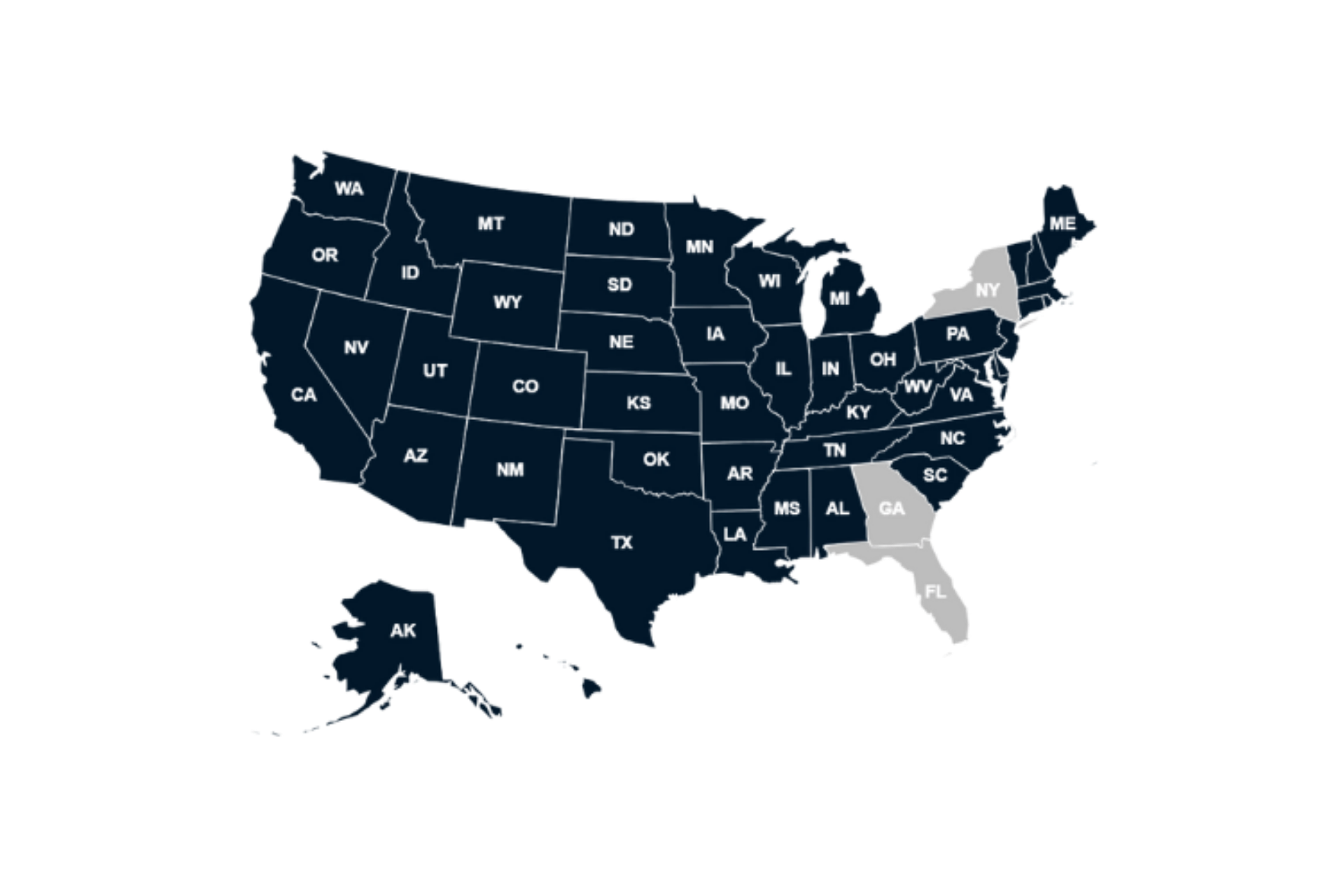
Limits, triggers, deductibles, participation percentages, enhancements, and state availability vary by account and market. For full eligibility, use "View state eligibility."
A broker-friendly starting point for the businesses the program is built to serve, organized by segment. Appetite spans food, beverage and consumables; consumer products; pharmaceutical, medical and life sciences; and industrial, transportation and specialty products.
Eligibility depends on product type, recall history, regulatory oversight, quality controls, testing, traceability, distribution territory, sales volume, supply-chain contracts, and requested coverage. Near-miss risks may be submitted for underwriting review.
Product recall policies can be structured around the insured's direct recall costs, liability to customers and distribution partners, business interruption, reputational harm, and excess capacity. Select the structure the account needs, and we'll route the submission to the right recall market. Coverage options depend on the account, and triggers and terms vary by policy form.
Coverage may help pay expenses associated with identifying, notifying, retrieving, transporting, inspecting, storing, destroying, replacing, and redistributing affected products.
Coverage may respond when a customer, retailer, distributor, or other third party seeks reimbursement for covered recall costs or financial loss caused by the insured's product.
Coverage may be available for income lost because of a covered recall event, including interruption of sales or operations.
Coverage may help fund advertising, public relations, communications, and other reasonable efforts to restore consumer confidence after a covered recall.
Coverage may respond when a qualifying government authority orders or triggers the removal of a product, subject to the policy's terms and trigger requirements.
Coverage may be available when the insured voluntarily recalls a product because it presents an insured danger or defect and the policy's trigger conditions are satisfied.
Optional endorsements may address malicious product tampering, cyber-triggered product events, or other emerging recall scenarios. Cyber incidents are not automatically included.
Follow-form excess coverage may provide additional limits above qualifying primary product recall insurance.
Beyond the base coverage, a product recall policy can often be tailored with endorsements.
Enhancements vary by product class, policy form, recall trigger, market, jurisdiction, and underwriting approval. Cyber-related recall events require specific policy language and are not automatically included.
Definition: Product Recall Insurance helps protect businesses from covered financial losses associated with removing a defective, contaminated, mislabeled, unsafe, or maliciously altered product from the market.
A recall creates first-party expenses the moment a product has to come off the shelf — notification, retrieval, transportation, inspection, storage, disposal, replacement, and redistribution all cost money whether or not anyone was ever hurt. On top of those direct costs, customers and distributors can create third-party recall liability when they seek reimbursement for the recall costs or financial loss the insured's product imposed on them. Standard products liability usually does not cover all of these recall expenses, because it is built to respond to third-party bodily injury and property damage rather than to the cost of pulling a product from the market.
Recalls are not all the same, and the coverage trigger matters. Accidental contamination, malicious tampering, product defects, and government-ordered recalls are distinct events, and a policy may respond to some and not others depending on how the insured event is defined. That is also why a voluntary recall is not automatically covered — a self-initiated recall generally has to satisfy the policy's insured-event definition and trigger conditions before the coverage responds. Reading the trigger language carefully is essential on every placement.
Underwriters lean heavily on traceability and quality control. Batch coding, lot tracking, testing, and supplier qualification determine how quickly and narrowly a recall can be executed, which directly affects the size of a loss. Supply-chain contracts and indemnification matter too, because they shift recall obligations up and down the chain. And a recall can cause loss of income even without a bodily injury claim — lost sales during a shutdown are a real cost — while brand rehabilitation expense arises from the advertising and public relations needed to rebuild consumer confidence afterward.
Consider the range of exposures: contaminated food, mislabeled ingredients, an electronic component overheating, a toy containing a hazardous part, a medical device defect, a faulty aircraft or automotive component, or a pet food contamination event. Each can trigger a costly recall. Greenwood's team helps brokers structure first-party and third-party coverage, primary and excess, with the enhancements the account needs — but the policy language governs, and this page is educational, not legal advice.

Complete submissions help underwriting evaluate product safety, regulatory exposure, quality controls, traceability, recall preparedness, contracts, and prior loss experience. Here's what to include so the account routes to the right recall market the first time. Not every item applies to every class — include what's relevant to the risk.
A signed and dated product recall supplemental application, ACORD 125 where requested, and the underlying primary application for excess placements.
A complete product catalog, product descriptions, intended use, end users, brochures, labels, warnings, instructions, and website.
Annual sales, sales by product, domestic and foreign sales, customer types, retailers, distributors, private-label arrangements, online sales, and geographic distribution.
Quality-assurance procedures, product testing, inspection protocols, supplier controls, certifications, batch tracking, lot coding, and traceability systems.
A written recall plan, crisis management procedures, customer notification process, regulatory response procedures, product retrieval process, disposal procedures, and internal recall team.
Copies of FDA citations, CPSC citations, other government citations, prior government orders, prior recall notices, and consent agreements where applicable.
Five years of currently valued product recall loss runs and general liability loss runs, plus prior recall incidents, contamination events, and product withdrawal events — with narratives for significant claims or recalls.
The current declarations page, existing product recall policy, requested limits, deductible, participation percentage, primary or excess placement, attachment point, effective date, requested enhancements, and any worldwide exposure.
Straight answers to the questions retail agents ask most before placing product recall business.
Product Recall Insurance helps protect businesses from covered financial losses associated with removing a defective, contaminated, mislabeled, unsafe, or maliciously altered product from the market. It can address the insured's direct recall expenses and, where included, third-party financial loss to customers and distribution partners. Greenwood General places it wholesale for retail agents and brokers serving manufacturers, distributors, processors, and importers.
Depending on the policy form, it may cover recall expense — such as notification, retrieval, transportation, inspection, storage, disposal, replacement, and redistribution — along with optional loss of income, brand rehabilitation, third-party recall liability, and excess capacity. Coverage triggers vary significantly by policy, so the exact scope is governed by the insured event definition and the enhancements on the quoted form.
Businesses across the supply chain can face recall exposure — manufacturers, distributors, processors, importers, private-label sellers, and retailers of food, beverages, consumer products, pharmaceuticals, medical devices, automotive components, and other goods. A recall can create substantial first-party expense even before any bodily injury or property damage claim, so businesses with regulatory oversight, contractual recall obligations, or high-volume distribution often carry it.
First-party coverage addresses the insured's own direct costs of responding to a covered recall — identifying, notifying, retrieving, transporting, inspecting, storing, destroying, replacing, and redistributing affected products. It responds to the insured's expenses rather than to a third party's claim, and it is the core of most product recall policies. Exact covered expenses vary by form.
Third-party recall liability may respond when a customer, retailer, distributor, or other party seeks reimbursement for covered recall costs or financial loss caused by the insured's product. It addresses liability the insured owes to others in the distribution chain, which is different from first-party recall expense. Availability and scope depend on the policy form and market.
Recall expense coverage helps pay the expenses associated with identifying, notifying, retrieving, transporting, inspecting, storing, destroying, replacing, and redistributing affected products after a covered recall event. It is a first-party coverage focused on the mechanics and cost of executing the recall, subject to the policy's insured event definition, limits, deductible, and participation percentage.
Generally, no. Products liability generally addresses third-party bodily injury and property damage — not the direct cost of retrieving, replacing, or destroying products. Those recall expenses are addressed by a dedicated Product Recall policy. Some products policies offer Limited Product Withdrawal Expense, but that is usually narrower than a comprehensive product recall policy. Many businesses carry both.
Loss of Income coverage may respond to income lost because of a covered recall event, including interruption of sales or operations. Unlike standard business interruption, which is usually tied to physical damage to covered property, product recall loss of income may respond to a recall-triggered loss without traditional physical damage. It is often optional, and exact triggers vary by form.
Brand rehabilitation coverage may help fund advertising, public relations, communications, and other reasonable efforts to restore consumer confidence after a covered recall. Because a recall can damage reputation and future sales well beyond the direct cost of retrieving product, this coverage targets recovery of the brand. It is frequently an optional enhancement, subject to sublimits and policy terms.
A government-initiated recall trigger may respond when a qualifying government authority orders or triggers the removal of a product, subject to the policy's terms and trigger requirements. Whether a government-mandated recall is covered depends entirely on the policy wording and the insured event definition, so brokers should confirm the government trigger on the quoted form.
A self-initiated recall trigger may be available when the insured voluntarily recalls a product because it presents an insured danger or defect and the policy's trigger conditions are satisfied. A voluntary recall is not automatically covered — it must meet the policy's insured event definition. Confirm the self-initiated trigger language and conditions before relying on it.
Malicious product tampering may be addressed through an optional endorsement, where available. It is not automatically included, and cyber-triggered product events require specific policy language as well. If tampering or accidental contamination is a concern for the account, flag it in the submission so underwriting can confirm whether the trigger can be added.
Cyber-related recall events require specific policy language. Some product recall forms offer cyber security consultant costs or address cyber-triggered product events, but only if the policy specifically includes them. Connected or smart products may require both cyber and product recall review, because a cyber policy generally addresses data and network events rather than the cost of recalling a product.
Primary product recall coverage may be written on a Claims-Made basis, depending on the market and form. Claims-Made policies respond to insured events first discovered and reported during the policy period, subject to the policy's conditions. Brokers should confirm the trigger, reporting requirements, and any prior-acts or continuity provisions on each submission.
Yes. Follow-form excess may be available over qualifying primary product recall coverage, and additional excess capacity up to $5 million may be available, including unsupported structures in certain markets. Excess policies may contain their own definitions, exclusions, conditions, notice requirements, attachment provisions, and endorsements, so they do not always follow every underlying term exactly.
Primary limits up to $5 million may be available for qualifying accounts, and additional excess capacity up to $5 million may be available separately. The right limit depends on the product, revenue, recall history, distribution, and contractual requirements. Limits, deductibles, and participation percentages vary by account and market and are subject to underwriting.
A participation percentage is the portion of a covered recall loss the insured retains, similar in concept to coinsurance on a recall event. Along with the deductible, it determines how much of the loss the insured shares. Participation percentage options may be available and vary by account, product class, and market, so confirm the structure on the quoted terms.
Underwriting generally wants a signed and dated product recall supplemental, complete product information, sales and distribution detail, quality-control procedures, a written recall plan, any government citations or prior recalls, and five years of currently valued product recall and general liability loss runs. Add the current declarations and the requested limits, deductible, participation percentage, and primary or excess placement. The more complete the file, the faster it quotes. Submit a risk to get started.
Greenwood helps retail agents access product recall markets for manufacturers, distributors, processors, importers, and specialty product businesses — first-party and third-party coverage, primary and excess options, loss of income, brand rehabilitation, government and self-initiated recall triggers, and worldwide options across food, consumer products, life sciences, and industrial products. We never compete with the retail agents we serve.
Limits, triggers, deductibles, participation percentages, policy forms, class eligibility, and state availability vary by account and market, and state availability must be confirmed before binding. Confirm eligibility with your underwriter for state-specific requirements or restrictions.