
Performance Bonds
Guarantees a contractor will complete a project per the contract terms, protecting the owner against default.
Quote non-standard and specialty surety bonds for accounts that don't fit standard underwriting. Place performance, payment, bid, subdivision, BMC-84, commercial, and disciplinary bonds through multiple specialty markets, with fast underwriting and same-day issuance where eligible.
Most eligibility comes down to the account's credit, financials, and the bond itself, not the industry. Here's a practical read on what tends to qualify, what falls outside this program, and the factors underwriting weighs on every submission.
Common submissions that fit the specialty surety markets behind this program.
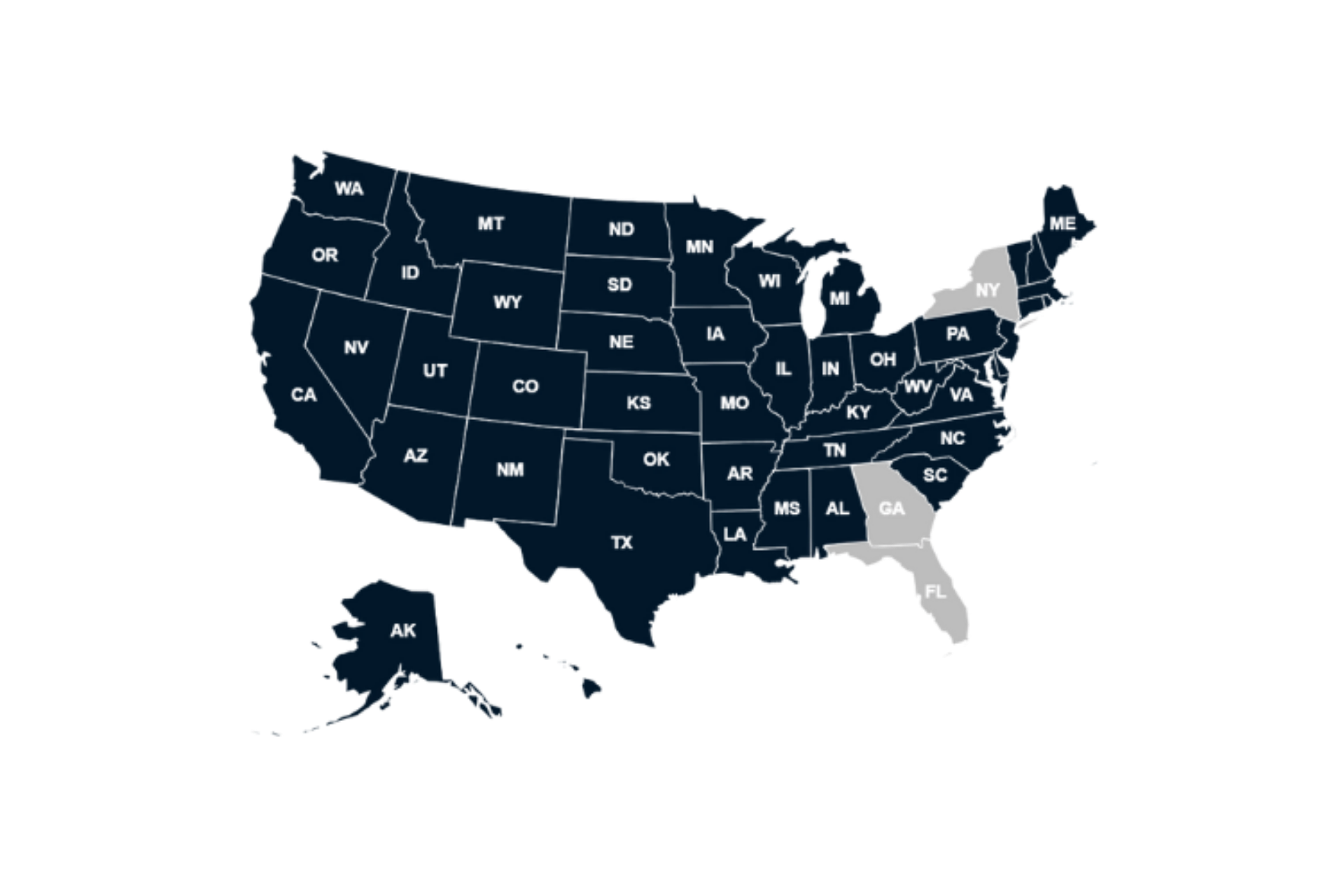
Availability varies by bond type, obligee, and market. Submit the risk to confirm eligibility for a specific bond.
The bond lines brokers place through this program most often, each underwritten individually, with the account's credit and financials driving terms.
Guarantees a contractor will complete a project per the contract terms, protecting the owner against default.
Guarantees subcontractors, laborers, and suppliers are paid, usually issued alongside a performance bond.
Guarantees a contractor will honor its bid and furnish the required contract bonds if awarded the job.
Guarantees a developer completes required public improvements such as streets, sewers, and grading for the municipality.
The FMCSA-required $75,000 freight broker bond guaranteeing brokers pay carriers and shippers.
The BMC-84 forwarder bond meeting the required $75,000 limit for licensed freight forwarders.
State-required bonds (e.g., $100,000 in California) protecting clients of non-attorney immigration consultants.
Board-ordered bonds a licensee must post to keep a license active after a disciplinary action, with limits up to $75,000.
License and permit bonds required by state and local agencies across a wide range of regulated businesses.
Protects a business or plan against loss from employee dishonesty or theft, including ERISA plan bonds.
Guarantees post-completion workmanship (maintenance) or delivery of materials under a supply contract.
One submission moves through underwriting to issuance. Here's the path a specialty bond takes from the moment you send the account.
Send the application, bond form or obligee requirements, and the bond amount through the portal.
A surety underwriter reviews the account, the obligation, and any project information.
Personal and business credit are reviewed, the primary driver of eligibility and price.
The account is matched to the specialty market whose appetite fits the risk.
Terms are confirmed: premium, any indemnity or collateral, and the final limit.
The bond is issued and delivered, electronically where the obligee accepts it.
A quick read on how common specialty bonds are priced and sized. Figures are starting points for reference only, and final pricing is credit-based and set by the surety after review. Limits marked are statutory where noted.
Contract performance guarantees, sized to the contract value.
Guarantees payment to subs and suppliers; usually paired with performance.
Supports a bid and the contract bonds that follow if awarded.
Guarantees public improvements for a municipality; sized to the work.
The FMCSA-required broker bond at the federal $75,000 limit.
BMC-84 forwarder bond meeting the required $75,000 limit.
State-required consumer-protection bond (e.g., $100,000 in CA).
LLC licensing bonds, including CA's $100,000 employee/worker bond.
License & permit bonds; the amount is set by the obligee.
Board-ordered bonds to keep a license active after discipline.
Starting rates are illustrative and not a quote or an offer of coverage. Actual premium depends on the bond type, amount, obligee, and the applicant's credit and financials, and is confirmed by the surety after underwriting. Statutory limits (such as the $75,000 BMC-84 and $100,000 immigration consultant bond) are set by the governing authority and may change.
A working reference for brokers on why accounts fall out of standard surety, how specialty markets fill the gap, and where a wholesale MGA fits.
Definition: A non-standard surety bond is any bond an account can't readily obtain through standard markets, not because the bond is unusual but because the risk profile is. Credit, financial condition, limited experience, the size of the bond, or the nature of the obligation pushes the account into specialty underwriting. Greenwood places these accounts wholesale, so the retail agent keeps the client.
The bond form is often identical to one a standard market would issue. What changes is the underwriting: a challenged credit history, a thin or new financial statement, a large penal sum relative to the account's size, or an obligee and bond type that standard carriers simply don't write. When any of those factors take an account outside routine guidelines, it becomes a specialty, or hard-to-place, placement.
Standard surety is built on low loss ratios and clean files. A single flag, such as a past claim, a tax lien, a recent bankruptcy, minimal contracting history, or a bond amount beyond the carrier's comfort, is often enough for an automatic decline. The account isn't uninsurable; it's just outside one carrier's box. Specialty markets exist to underwrite the exceptions individually.
Specialty markets price for risk rather than screen it out. They weigh the whole picture, including credit, experience, financials, indemnity, and the specific obligation, and offer terms with premium, collateral, or indemnity adjusted to the exposure. That flexibility is what lets a broker place a freight broker with average credit, a developer's subdivision bond, or a professional's disciplinary bond that a standard market returned.
Standard underwriting is largely pass/fail against fixed criteria. Specialty underwriting is judgment-based: the underwriter looks for offsetting strengths, asks for the story behind a credit event, and structures the bond to make the risk workable. It takes more information up front, but it turns declines into placements.
Credit-challenged principals, new and thinly capitalized businesses, large or fast-growing contractors, freight brokers and forwarders filing the BMC-84, developers needing subdivision bonds, immigration consultants, and licensees ordered to post a disciplinary bond. Each is routine for a specialty market and difficult for a standard one.
Rather than shop the same declined account across a dozen carriers, a broker sends one submission to Greenwood and reaches multiple specialty markets at once. You get access you may not be appointed for directly, underwriters who know how to structure tough files, and a wholesale partner that never competes with you for the client. Explore the full range of our wholesale commercial insurance markets.
Rounding out an account? Greenwood places the coverage alongside the bond through the same wholesale relationship: contractors license bonds, contractors general liability, a commercial package, or environmental liability. Builders risk, commercial property, commercial auto, inland marine, and excess liability are available across our commercial insurance markets.
Straight answers to the questions retail agents ask most before placing non-standard and specialty surety business.
A non-standard surety bond is one an account can't easily obtain through standard markets, usually because of credit, financial condition, limited experience, the size of the bond, or the nature of the obligation. The bond itself works the same way; it's the risk profile that pushes it into specialty underwriting. Greenwood General is a wholesale MGA that gives brokers access to the specialty surety markets built to write these accounts.
Brokers use specialty surety when a client's bond request has been declined by a standard market or falls outside routine underwriting, for example credit-challenged principals, newer businesses, larger contract bonds, freight brokers and forwarders, immigration consultants, or professionals ordered to post a disciplinary bond. The retail agent keeps the relationship; Greenwood places the bond wholesale.
A performance bond guarantees the principal will complete the contract according to its terms; if they default, the surety is responsible up to the bond penalty. A payment bond guarantees that subcontractors, laborers, and suppliers on the project get paid. The two are usually issued together on construction contracts, often for the full contract amount.
A bid bond supports a contractor's proposal, guaranteeing they will honor their bid and furnish the required performance and payment bonds if awarded the job. A performance bond takes over once the contract is signed and guarantees the work itself. Bid bonds are typically issued at no premium as part of the prequalification for the contract bonds that follow.
Premium is a percentage of the bond amount (the penalty), driven mainly by the principal's personal and business credit, financial strength, experience, and the type and size of the bond. Contract bonds are underwritten more intensively than small commercial bonds. Any starting rates shown on this page are for reference only, and final pricing is set by the surety after review.
Often, yes. Specialty markets exist precisely to consider credit-challenged principals, with premium adjusted for the risk and sometimes additional indemnity. Some conditions remain outside appetite for this program: open bond payouts, active bankruptcies and unpaid tax liens, and revoked licenses. When credit is the concern, submit the account and underwriting will confirm the best available option.
Many small commercial and license bonds can be approved and issued the same day on eligible submissions. Contract bonds and larger or credit-challenged accounts take longer because they require fuller underwriting. Complete submissions move fastest, so the more the file answers up front, the quicker the turnaround.
An active or recent bankruptcy is generally outside this program's appetite, along with unpaid tax liens and outstanding bond payouts. Once a bankruptcy is discharged and the file shows recovery, some specialty markets will reconsider. Rather than assume it can't be placed, submit the account with the details and underwriting will tell you what's available.
At minimum, a completed application, the bond form or obligee requirements, the required bond amount, and owner information with authorization for a credit review. Contract bonds usually add financial statements, a work-in-progress schedule, and bank and reference information. Transportation and license bonds often just need the application and the obligee's form.
The BMC-84 is the surety bond freight brokers and forwarders file with the FMCSA to meet the federal $75,000 financial-responsibility requirement. It guarantees the broker will pay carriers and shippers per its agreements; if it doesn't, claimants can recover against the bond. It's credit-based and underwritten individually, so submit the account for terms.
A subdivision bond (also called a site improvement or plat bond) guarantees that a developer will complete required public improvements, such as streets, sidewalks, sewers, and grading, to the standards of the municipality that is the obligee. Because they are backed by the developer's obligation rather than a paying customer, they are underwritten on financial strength and are often a specialty placement.
Several states require non-attorney immigration consultants to post a bond so clients harmed by improper practices can recover. In California the required amount is $100,000. It is a licensing/consumer-protection bond, credit-based, and available through this program, commonly placed with premium starting around 1.8% for qualified applicants.
An LLC bond generally refers to a bond a limited liability company must post to satisfy a licensing requirement, most notably California's $100,000 LLC employee/worker bond for licensed contractor LLCs, which protects employees for unpaid wages and benefits. It is required in addition to the contractor's license bond and is available through this program.
Yes. Brokers can submit through the Greenwood General online risk submission portal or log in to the surety platform for eligible bonds. No appointment is required to submit; send the account first and complete the appointment if you decide to place the bond.
Where the obligee accepts electronic filing or e-signed bonds, yes, and many commercial and license bonds are delivered digitally, which shortens the time between issuance and the obligee accepting the bond. Some obligees still require a wet-signed, sealed original; the requirement follows the obligee, not Greenwood.
Yes. Alongside commercial and license bonds, this program places contract surety, including bid, performance, payment, subdivision, and maintenance bonds, for accounts that need a specialty market because of size, credit, or experience. Contract bonds are underwritten on financials, work on hand, and track record.
A broad range: construction and contracting, transportation and logistics (freight brokers, motor carriers, forwarders), professional services requiring licensing bonds, developers needing subdivision bonds, and businesses facing court or disciplinary bond requirements. Eligibility is driven more by the account's financial profile than the industry itself.
The limit (penal sum) is set by the obligee or the statute behind the bond, for example $75,000 for a BMC-84 freight broker bond or $100,000 for a California immigration consultant bond. On contract bonds the amount follows the contract value. Underwriting then decides whether the account qualifies for the required limit.
For small commercial and license bonds, usually not, since an application and credit review are enough. For contract bonds and larger limits, financial statements, a work-in-progress schedule, and bank and reference information are typically required so the surety can assess capacity.
Yes, in many cases. Limited business history is one of the main reasons an account becomes non-standard, but specialty markets will consider newer businesses based on the owner's credit, experience, and the type and size of the bond. Smaller license and commercial bonds are the easiest starting point for a new venture.
Most commercial and license bonds are continuous or renew annually, with a renewal premium billed before the anniversary; pricing can be re-rated on current credit and claims history. Contract bonds generally run for the term of the project. Track the obligee's renewal or expiration date so the bond doesn't lapse and jeopardize the license or contract.
No. Greenwood General is a wholesale MGA that works exclusively with retail insurance agents and brokers. We never solicit or sell to the insured directly, and the client relationship stays with the retail agent while we place the bond through our specialty markets.
Availability varies by bond type, obligee, and the surety market behind it. Many commercial and transportation bonds are available nationally, while contract and license bonds depend on the state and obligee. Submit the account and your underwriter will confirm availability for the specific bond.
The obligee is the party that requires the bond and is protected by it, such as a government agency, court, licensing board, or project owner. The principal is the business buying the bond, and the surety guarantees the principal's obligation to the obligee. Identifying the correct obligee and bond form up front keeps a submission moving.
Small commercial, license, and transportation bonds can often be quoted and issued the same day when the file is complete. Contract bonds and larger or credit-challenged accounts take longer because of the financial review involved. The completeness of the submission is the biggest factor in turnaround.
Brokers submit to Greenwood instead of chasing carriers directly because one submission reaches multiple specialty markets, specialty underwriters structure the tough files, and placement is faster, all through a wholesale partner that never competes with you for the client.