
Equipment
Contractors Equipment
Coverage for owned, leased, rented, or borrowed equipment used in business operations — on the job, in transit, and in storage.
Greenwood General is a wholesale MGA giving retail insurance agents and brokers access to inland marine markets across the United States — mobile property, contractors equipment, installation floaters, builders risk, and specialized commercial property that standard property forms limit once it leaves a fixed location.
A wholesale inland marine program for commercial property that moves, travels, or is installed. Place contractors equipment, builders risk, installation floaters, scheduled property, transit, and specialized inland marine exposures through one submission path — with minimum premiums starting around $800 and total insured values up to $10 million for qualifying risks. Multiple coverage forms let retail agents round out mobile-property accounts without shopping multiple wholesalers.
The parameters brokers work within on an inland marine submission — one program, multiple coverage forms.
Rounding out the account? Greenwood General also writes builders risk and contractors general liability — or explore all of our wholesale commercial insurance markets.
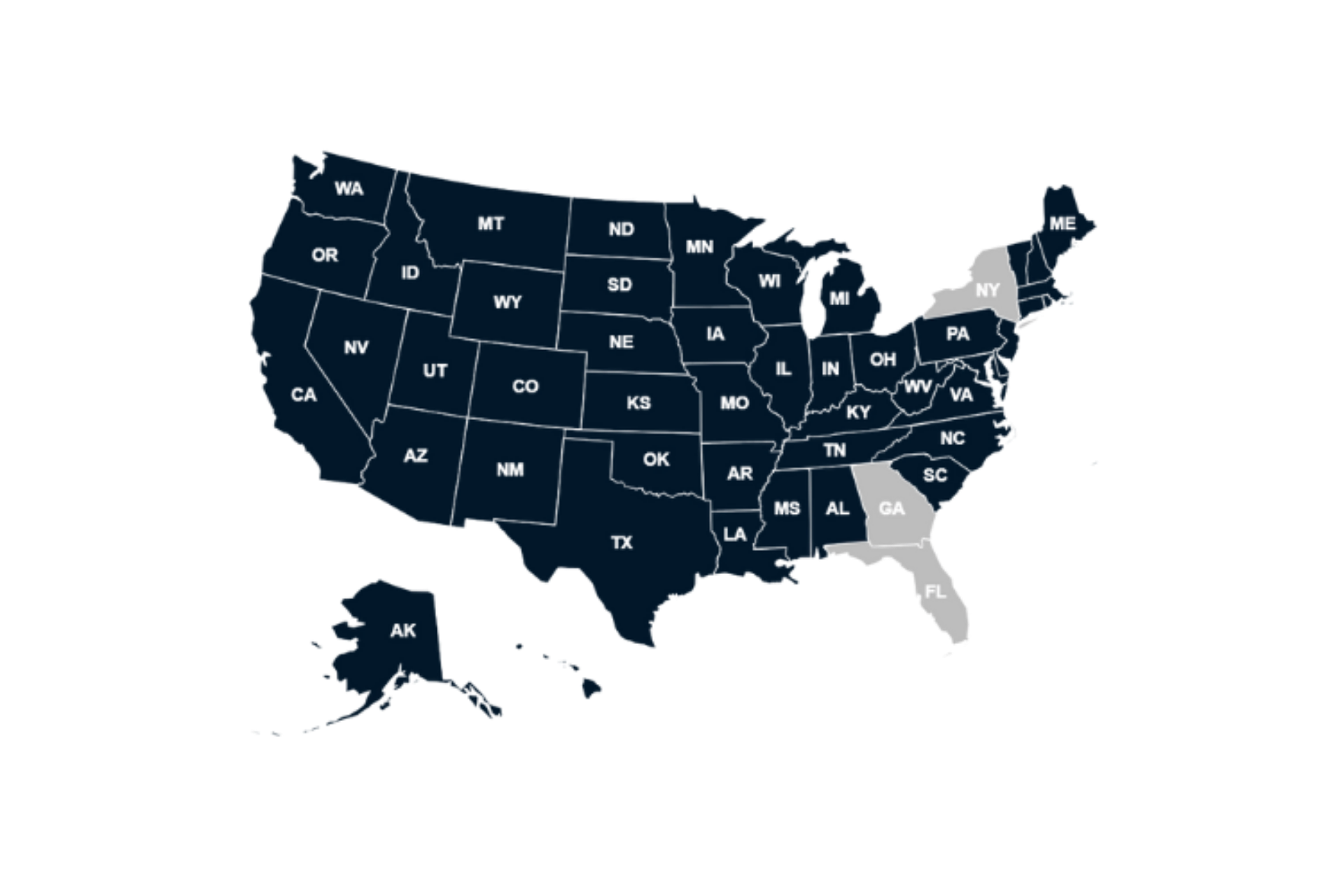
Availability varies by class, values, and underwriting guidelines. For full eligibility, use "View state eligibility."
The inland marine forms brokers place most often — mobile equipment, course-of-construction, installation, scheduled property, transit, and bailee exposures — all under one wholesale relationship. Select the coverage the account needs and we will route the submission to the right inland marine market.
Coverage for owned, leased, rented, or borrowed equipment used in business operations — on the job, in transit, and in storage.
Coverage for commercial construction projects during the course of construction — ground-up, renovation, and remodel.
Protection for materials and equipment before and during installation, from the time the contractor takes possession.
Coverage for valuable commercial property that requires scheduled, item-by-item protection beyond a standard property form.
Protection while equipment and materials are transported between jobsites, locations, and storage.
Protection for transported cargo while in transit, for motor carriers and transportation operations.
Coverage for communication systems, mobile medical equipment, and electronic and data processing property.
Definition: Inland marine insurance is a category of commercial property coverage for property that moves, travels, or is installed away from a fixed location — plus certain high-value or specialized property that standard property forms won't fully cover. Despite the name, it has nothing to do with boats; it covers "floating" property, from contractors equipment to medical devices to goods in transit.
A standard commercial property policy is built around buildings and their contents at a fixed, scheduled location — and it typically limits or excludes coverage once property leaves those premises. That leaves a gap for any account whose property is mobile: equipment moving between jobsites, materials in transit, goods held in someone else's warehouse, or specialized items worth more than a property form will schedule. Inland marine is the family of forms designed to close that gap.
Commonly covered property includes contractors and mobile equipment, installation materials, fine arts, medical equipment, electronic and communication equipment, scheduled high-value property, and property in transit. Because the exposures are so varied, inland marine is underwritten to the property and how it's used — Greenwood General's team matches each account to the right form, whether that's a contractors equipment floater, an installation floater, or course-of-construction builders risk.

A broker-friendly starting point for the program's appetite. Eligibility varies by class, values, and account — submit the risk to confirm.
Don't see the class listed? Submit it — appetite is confirmed per account based on the property, values, and how it's used.
Inland marine accounts are underwritten to the property and how it's used — the completeness of the file drives the speed of the quote. Here's what to include so the submission routes to the right inland marine market the first time.
A completed ACORD 125 with the inland marine supplemental if applicable — the supplemental captures the detail underwriting needs to classify the exposure.
An itemized schedule or equipment list with descriptions, model and year, and whether items are owned, leased, rented, or borrowed.
Values by item or class and the total insured value, so the policy is written to the exposure actually at risk.
For course-of-construction accounts, the project description, budget, term, and construction type so the builders risk exposure can be rated.
What the insured does, where the property is used and stored, and any property locations relevant to the exposure.
Currently valued loss runs where applicable — typically several years — so underwriting has the full picture of the account.
Straight answers to the questions retail agents ask most before placing inland marine business.
Inland marine insurance is a category of commercial property coverage for property that moves, travels, or is installed away from a fixed location — plus certain high-value or specialized property that standard property forms won't fully cover. Despite the name it has nothing to do with boats; it covers "floating" property, from contractors equipment to medical devices to goods in transit. Greenwood General places it wholesale for retail agents and brokers.
It covers mobile and specialized commercial property: contractors and mobile equipment (owned, leased, rented, or borrowed), installation materials, scheduled high-value property, property in transit, cargo, warehoused goods held for others, communication and electronic equipment, mobile medical equipment, and fine arts. The specific form is matched to the exposure, so the coverage on any account depends on the property and how it's used.
Commercial property covers buildings and their contents at a fixed, scheduled location. Inland marine covers property that leaves that location — equipment moving between jobsites, materials in transit, goods held in someone else's care — as well as specialized high-value items. Standard property forms often limit or exclude coverage once property is away from the premises, and inland marine is designed to fill that gap.
Yes — that's a core purpose of inland marine. Contractors equipment and equipment floaters cover tools and machinery while they move between jobsites, sit at a temporary location, or are transported, subject to the policy terms. Because standard property forms restrict off-premises coverage, brokers place inland marine for accounts whose equipment doesn't stay in one place.
It can. Contractors equipment coverage can extend to equipment that is owned, leased, rented, or borrowed, which matters for accounts that regularly rent or lease machinery. Disclose the leased and rented values and any contractual insurance requirements so underwriting writes the schedule correctly.
An installation floater covers materials and equipment a contractor is installing — from the time they take possession, through transit and storage, until the installation is complete and accepted. It's commonly used by trade contractors such as HVAC, electrical, and plumbing whose materials are at risk before they become part of the building.
Contractors equipment coverage is an inland marine form that protects the mobile tools and machinery a business uses in its operations — owned, leased, rented, or borrowed — against covered causes of loss on the job, in transit, and in storage. Equipment can be scheduled item by item or covered on a blanket basis depending on the account.
Yes. Builders risk is frequently written on an inland marine form, covering a commercial project during the course of construction. Greenwood General offers builders risk within its inland marine program and as a dedicated program, so brokers can place course-of-construction risk alongside contractors equipment and installation exposures.
A scheduled property floater covers specific high-value commercial items listed individually on the policy — each with its own description and value. It's used for property that needs coverage broader than a standard property form provides, such as specialized equipment, fine arts, or valuable electronic and communication gear.
Any commercial account with property that moves, travels, is installed, or is held for others: contractors and construction companies, equipment rental businesses and dealers, medical providers, telecommunications contractors, warehouse operators, transportation companies, manufacturers, installation contractors, and commercial property owners with scheduled property. If the exposure leaves a fixed location, inland marine is usually the right form.
In many cases, yes. When an account qualifies, the inland marine coverage can be packaged alongside commercial property so the fixed-location and mobile-property exposures sit with one wholesale relationship. Flag both exposures in the submission and underwriting will confirm how the account can be structured.
Inland marine accounts are underwritten individually, so turnaround depends on the class and the completeness of the file. A complete submission — application, schedule of property or equipment list, values and total insured value, description of operations, and loss runs — routes to the right terms fastest. Submit a risk to get started.
A wholesale inland marine program designed around mobile and specialized commercial property: multiple coverage forms, values up to $10 million for qualifying risks, responsive underwriting, and practical guidance from submission to bind. We never compete with the retail agents we serve.
Availability varies by class, values, and underwriting guidelines. Confirm eligibility with your underwriter for state-specific requirements or restrictions.